An average American puts out about 32,000 pounds of CO2 a year (14.5 metric tons). A grown tree takes in something like 48 pounds a year, so it would take around 670 of them to soak up one person's year.
New trees are much slower. While a sapling is young it takes in only a little: about 130 pounds over its first ten years, by the EPA's estimate. At that rate, around 250 newly planted trees would need a whole decade to absorb what one American puts out in a single year, and that's if every one of them survives. Trees do pull carbon out of the air. They just do it over decades, not in the year we emit it, and we'd rather be straight with you about the numbers.
Two numbers to remember
A grown tree: about 48 pounds of CO2 a year. It's a rough, widely used figure from the Arbor Day Foundation. Real trees vary a lot with their species, size and where they grow.
A new tree: about 130 pounds over its first ten years. That's the EPA's figure for a young tree, and it already allows for the ones that don't survive. It works out to around 13 pounds a year, because a sapling is small and grows into its carbon slowly.
The table below uses the second number, because that's what a tree you plant today actually does.

How many trees for everyday things
Here are a few familiar things, how much CO2 each one adds up to, and how many new trees it would take to absorb that much. They're rough US averages.
Read it like this: driving an average car for a year puts out about 9,500 pounds of CO2. Plant about 73 trees, and over their first ten years they'll absorb roughly that much, as long as they survive. That covers one year of driving. The next year of driving needs another 73.
| What | CO2 lb |
Trees to plant absorb it over 10 years |
|---|---|---|
| One American, for a whole year | 32,000 | 250 |
| Driving an average car for a year | 9,500 | 73 |
| A round-trip flight, New York to London | 2,500 | 19 |
| A round-trip flight, New York to Los Angeles | 1,800 | 14 |
| Electricity for an average home, for a year | 11,000 | 81 |
| A pound of beef every week, for a year | 5,200 | 40 |
| A pound of chicken every week, for a year | 510 | 4 |
| A new iPhone, including three years of charging | 120 | 1 |
For most people, home energy and driving are the big ones. A flight is a lot in one go. A pound of beef a week adds up to about half a year of driving, while a new phone hardly registers.
So how many trees should I plant?
If you want one number: about 250 trees a year, or roughly 20 a month. Once they've had ten years to grow, that's about what it takes to absorb the CO2 an average American puts out in a year.
It's a rough guide, not an exact sum, and it works best alongside using less energy where you can. Every tree you plant keeps absorbing carbon long after its first ten years, too.
Three things worth knowing
Trees are slow
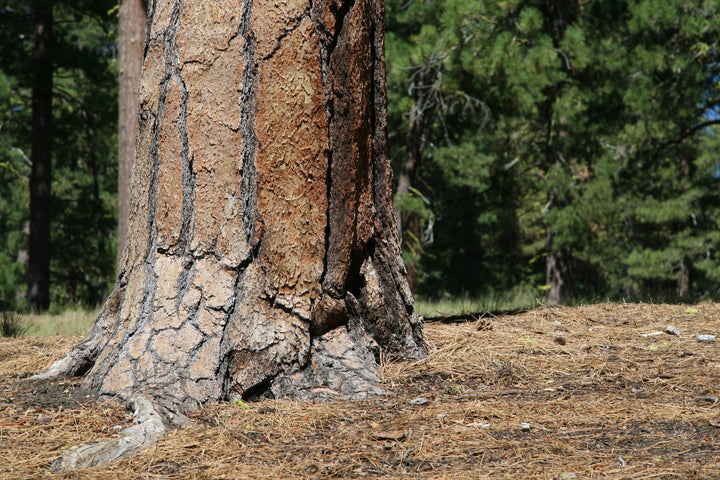
A young tree takes in very little. Most of a tree's carbon goes in during its middle years, and long-lived trees keep going for a very long time. Ponderosa pines, which we plant in Oregon, often live 300 to 600 years. So the trees planted for this year's emissions are still catching up a decade or more from now.
Most trees make it
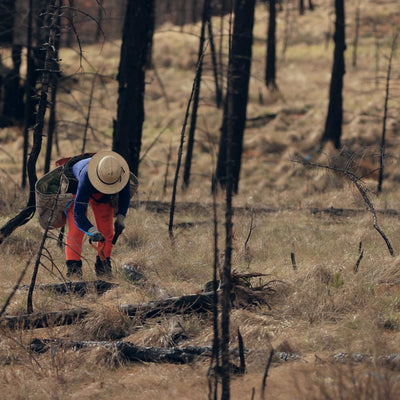
Young trees face drought, pests and now and then a fire, so not every one survives. Most do. The EPA's figures for city trees, which have a harder start than most, assume about two in three are still growing after five years and about six in ten after ten. Native trees, planted in the right season and looked after for their first few years, tend to do better than that. The numbers on this page already allow for those losses. A tree holds on to its carbon for as long as it's alive, so those early years of care are where most of the difference is made. And when a fire does hit, the forest gets replanted, as in southern Oregon after the 2021 Bootleg Fire, where some of our trees are going in.
How trees are planted matters more than how many
Native trees, in places that suit them, looked after until they can manage on their own, do far more good than a big number planted and left. Ecologists who study this make a simple point: protecting forests that are still standing comes first, and planting goes alongside cutting our own emissions, not instead of it. Trees bring a lot else with them too, for soil, water, wildlife and the people who plant and care for them.
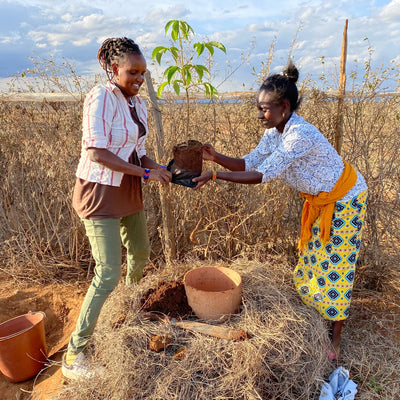
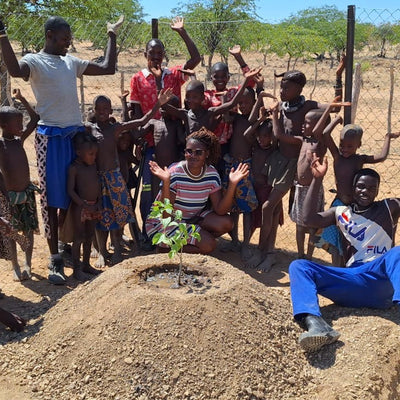
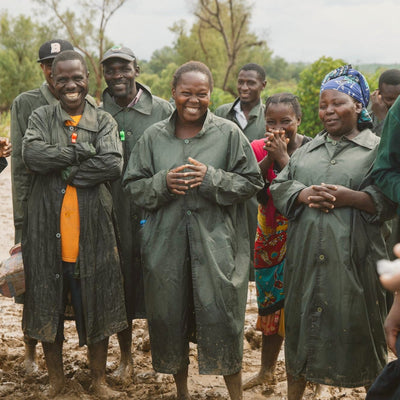
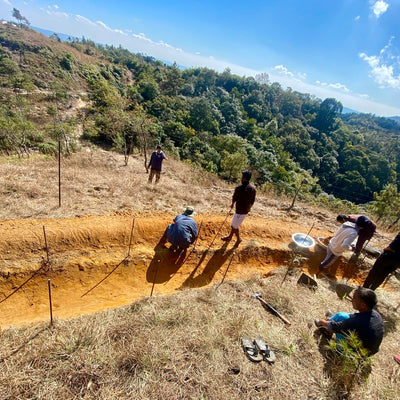
That's the standard we hold our own planting to. We only plant with projects built around keeping young trees alive: native species chosen for the land, local people paid to plant them and look after them, and follow-up once the trees are in the ground. At Mteza Creek in Kenya, the team digs trenches to bring the tide back before a single mangrove goes in. In Oruseu, Namibia, they dig swales that hold the rain for the young trees through the dry season. You can read more about our planting partners and how we choose them.
Why mangroves are special
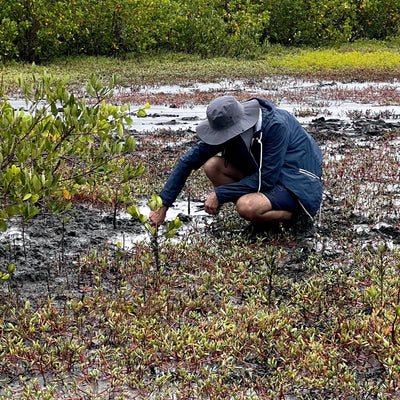
Most of a mangrove forest's carbon isn't in the trees at all. It's in the deep, waterlogged mud underneath, which can hold several times more carbon than the forest above it. That's why clearing mangroves releases so much, and why bringing them back matters. We plant mangroves in two places: with EarthLungs on the Kenyan coast, where the team digs trenches to bring the tide back to Mteza Creek, and with SamaÚma at Primeira Cruz on Brazil's Amazon coast, where manatees, crabs and the scarlet ibis are coming back.
Questions people ask
Is planting trees the same as offsetting?
Not really, and we'd rather say so plainly. A carbon offset, strictly speaking, is a credit that stands for a metric ton of CO2 kept out of the air, measured and checked, with rules for what happens if that carbon is lost. A tree gift from us isn't a carbon credit. It's a real tree, planted with one of our partners, that absorbs carbon slowly as it grows.
How can I work out my own number?
Start with your bills. The EPA's Greenhouse Gas Equivalencies Calculator turns kilowatt-hours, therms of gas and gallons of gasoline into pounds of CO2. Divide the pounds by 130, and that's roughly how many trees to plant to absorb it over their first ten years.
If you'd like to plant some trees alongside the changes you're making, our projects page shows where each project is and who does the planting.
Sources: Our World in Data, CO2 emissions per capita (Global Carbon Budget, 2025 data); Arbor Day Foundation, Tree Facts (accessed November 2026); US EPA, Greenhouse Gas Equivalencies Calculator: Calculations and References (updated August 2026, 2022 data) and the calculator; US EPA, GHG Emission Factors Hub (January 2025); Great Circle Mapper (flight distances); Poore and Nemecek (2018), via Our World in Data, greenhouse gas emissions per kilogram of food; Apple, iPhone 17 Product Environmental Report (September 2025); Donato et al., Mangroves among the most carbon-rich forests in the tropics, Nature Geoscience (2011); Holl and Brancalion, "Tree planting is not a simple solution", Science (2020), as reported by UC Santa Cruz (May 2020).