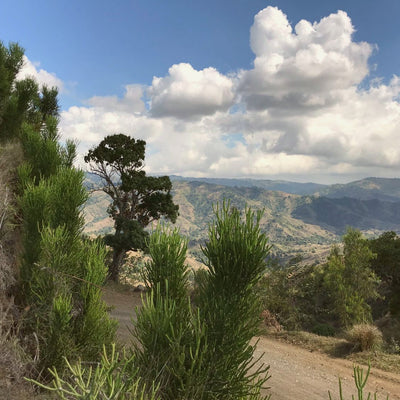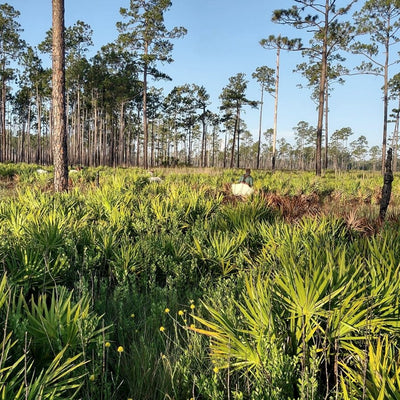
Oruseu, in Namibia's Kunene Region, has a hot desert climate. The dry season is long and the rainy season short and intense. Rainfall is dropping and getting harder to predict, and drought and overgrazing have stripped away much of the vegetation.

How dry is dry
At Opuwo, the regional capital about 85 km away, an average year brings 285 mm of rain, falling on just 33 days. Almost none falls from May to September, and January and February are the wettest months. The average also hides how much it swings: by the end of 2019, Opuwo's rain was 51 percent below normal.
Meanwhile the sun and the dry air could take up far more water than falls. Across Namibia's arid land, the water that could evaporate in a year is roughly ten times the rain.
Spread over one hectare, Opuwo's 285 mm is 2.85 million litres, a little more than an Olympic swimming pool. On an 18 hectare campus, an average year's rain would fill about 20 such pools. The question is how much of it stays.
So when rain does come, most of it runs straight off the land, causing dangerous flash floods instead of soaking in.
Bare ground makes this worse. Raindrops hitting bare soil pack its surface into a thin, hard crust that water struggles to get through. On sparsely covered land, water can start running off after as little as 3 mm of rain.
For Sadhana Forest, water work is the foundation of bringing land back to life. The aim is to stop rain from running off and washing the soil away, and to keep it on the land so plants can grow and the groundwater can fill up again. In its own words, "slow the flow, let it sink".
How a swale works

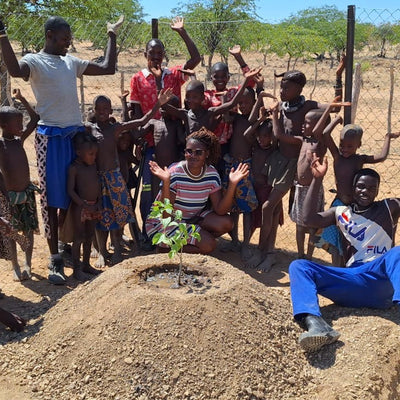
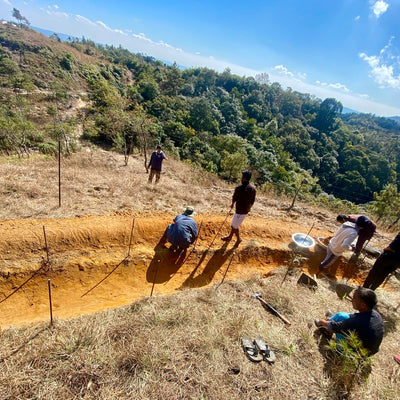
On its 18 hectare campus, the team has carried out a lot of this work, digging swales and building a gabion. Swales are trenches dug along the contour of the land. Like the gabion, they are there to slow the water, spread it out and help it sink in.

Because a swale follows the contour, it is level along its whole length, so water that runs into it has nowhere to go. It stops, spreads along the trench and soaks in. The soil that comes out is piled on the downhill side as a mound, and that is where seeds and trees go, with damp ground beside them. The UN's Food and Agriculture Organization recommends this kind of contour planting for trees where 200 to 750 mm of rain falls a year, which takes in Opuwo's 285.

A gabion is a wire cage packed with stones. Set across a gully, it lets water through, but slowly, so a flood loses its force and the soil it carries settles behind the stones instead of washing away.
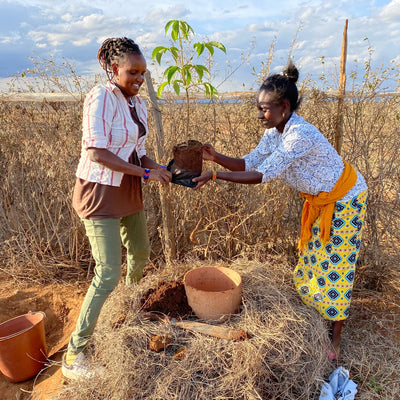
The team pairs this with planting native trees, such as a local moringa (Moringa ovalifolia) and the baobab. The work is meant to show what land restoration can do in the area.


Sadhana Forest works with Himba families in Kunene. See the project.
Sources: Sadhana Forest, "Sadhana Forest Namibia" (centre page) and "Our Mission"; Atlas of Namibia Team, "Rainfall patterns" and "Evaporation and aridity" (Atlas of Namibia, 2022); Excel Dynamic Solutions for Sadhana Forest Namibia, environmental impact assessment for reforestation in Oruseu (2023); Prall & Scelza, "The dietary impacts of drought in a traditional pastoralist economy" (2023); Critchley & Siegert, Water harvesting (FAO, 1991); WOCAT, "Gabion check dam".