Most fruit trees start from a seed or a nursery seedling. Red mombin is easier than that. Cut a thick branch, push it upright into the ground, and it will root and grow. In Haiti it is called siwèl. In Spanish it is often called jocote, and in English it also goes by Spanish plum.

A small tree with a sour-sweet plum
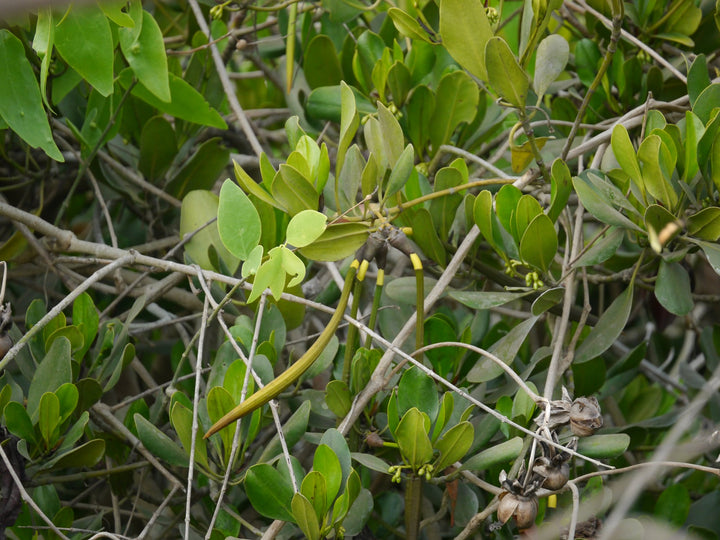
Red mombin is a relative of the cashew. In the lowlands it stays a shrub or a small, low-branched tree. It drops its leaves each year, and its tiny red or purple flowers open along the branches before the new leaves come, which start out red or purple themselves. The fruits are like small plums, 2.5 to 5 centimetres long, and can ripen purple, red, orange or yellow around a large stone. They taste sweet with a slightly sour finish. The name jocote comes from the Nahuatl word for sour fruit.
People eat the ripe fruit straight from the tree, stew it with sugar, or boil and dry it to keep. Unripe fruit is eaten with salt or made into tart sauces. Cattle graze the leaves.

A fence that fruits
Because big cuttings root so easily, red mombin is one of the trees most used for living fences. A row of cut branches becomes a row of fruit trees. It grows very slowly from seed, so cuttings are the usual way to plant it.
It is native from southern Mexico to northern Peru and Brazil, and it has long been planted on most of the islands of the West Indies.
In Haiti
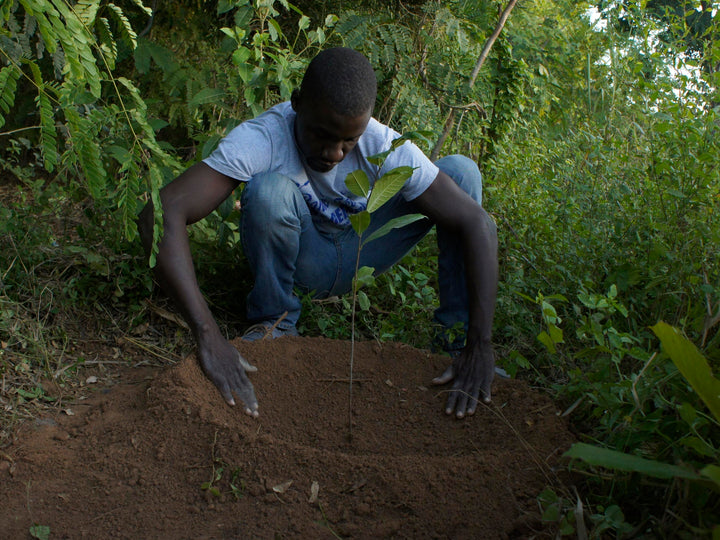
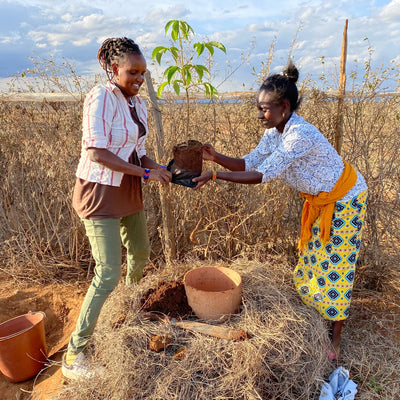
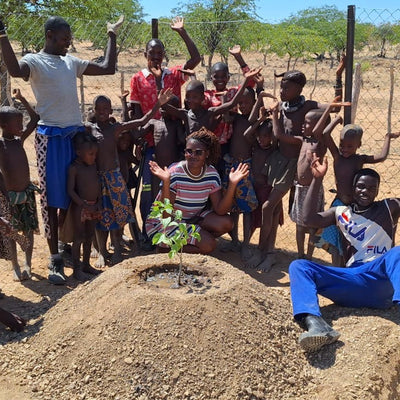
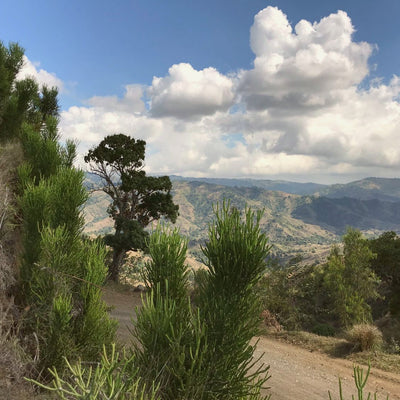
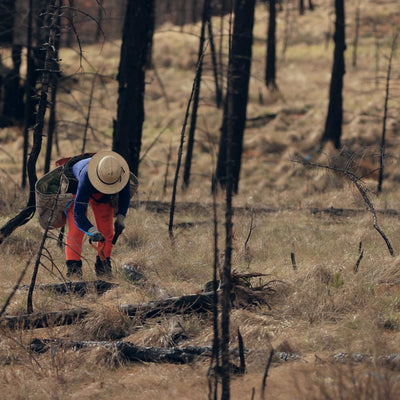
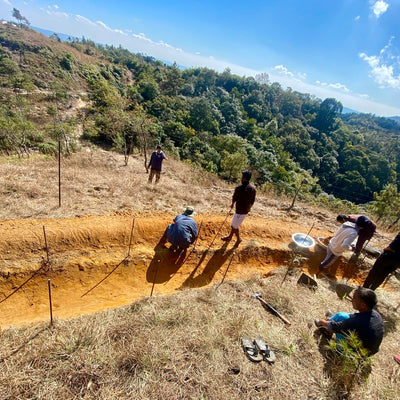
On 10 August 2026, a crew of ten planting with Mother Trees at Saint Etienne, Haiti, put in 17,050 plants. Among them were 5,000 siwèl, planted alongside its cousin the yellow mombin, moringa and cedar.

More about siwèl, or see the Haiti pollinator agroforestry project.
Sources: J. Morton, "Purple Mombin", Fruits of Warm Climates (Purdue NewCROP); "Spondias purpurea", Wikipedia; Greenr Gifts planting record (Greenspark planting record for Saint Etienne, Haiti, August 2026).