$3per tree
0.4 kgCO₂ a year for every $1

Nippes Department, Haiti Open map

The pollinator agroforestry project in Haiti delivers a range of ecological and social benefits to the region. One of the key ecological impacts is the enhancement of biodiversity, as the integrated agroforestry system creates habitats for a variety of animal species, including the Ruddy Duck, Brown Flower Bat, and White-Throated Gecko. Additionally, agroforestry plays a significant role in carbon sequestration. Each tree planted is estimated to capture 0.027 tonnes of CO2 over its lifetime, contributing to Haiti’s efforts to mitigate the effects of climate change.

From a social perspective, the project creates direct economic benefits for local communities. For every 10,000 trees planted, 20 work days are generated, providing employment opportunities that particularly benefit women. The honey-optimised agroforestry model also supports local honey producers, integrating beekeeping with tree planting to create sustainable livelihoods. Furthermore, the cultivation of high-value tree species such as mango, avocado, and cashew offers farmers additional sources of income, making the project beneficial not only for the environment but also for the local economy.

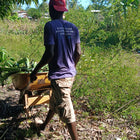
  • A group of planters with hoes setting a long row of cactus along the edge of a field

    Fences, pigeon peas and fruit trees: planting d...

    From January to August 2026, crews planting with Mother Trees in Haiti put in living fences, pigeon peas and fruit trees on six planting days. Greenr Gifts trees were part...

    Fences, pigeon peas and fruit trees: planting d...

    From January to August 2026, crews planting with Mother Trees in Haiti put in living fences, pigeon peas and fruit trees on six planting days. Greenr Gifts trees were part...

  • Three women in white coats holding up a frame of honeycomb

    Solar power for Haiti's honey

    Fanm Limyè is building solar-powered centres for honey and produce, reaching more than 1,500 farming families in Haiti's West and Nippes departments.

    Solar power for Haiti's honey

    Fanm Limyè is building solar-powered centres for honey and produce, reaching more than 1,500 farming families in Haiti's West and Nippes departments.

1 of 3

How we know it's planted

The project will utilise advanced site technology for monitoring and verification, ensuring accountability and success. This includes tracking environmental conditions and tree growth to meet the project’s goals of ecological restoration and economic empowerment.

Learn more about the work

What Is Pollinator Agroforestry?

What Is Pollinator Agroforestry?

Pollinator agroforestry is a sustainable land management approach that combines the cultivation of trees or woody plants with crops or livestock, while also creating habitats for pollinators such as bees, butterflies, and birds. This system offers numerous ecological and economic benefits, including improved pollination, biodiversity, and enhanced land productivity. By integrating pollinator-friendly plants into agroforestry systems, this method promotes long-term sustainability for farming communities while supporting the vital role of pollinators in food production.

Why Haiti?

Why Haiti?

Haiti is one of the poorest countries in the world, facing significant environmental and economic challenges. Women and girls play a central role in Haitian society, with nearly half of households being women-led. Despite their contributions, they face ongoing inequality. 

Mother Trees works with Fanm Limyè, a women-led Haitian association it sponsors in the US, which supports 32 beekeeping groups in the West and Nippes departments of Haiti and creates new economic opportunities for women.

This project leverages pollinator agroforestry, aiming to identify, grow, and expand in-demand products that can be vertically integrated on farms and in forests. The honey-optimised agroforestry model, co-created with Haitian partners, farmers, and honey producers, offers a market-based solution. This integrated approach addresses both economic and environmental concerns, helping communities while fostering sustainable agricultural practices. Agroforestry is crucial for Haiti, a country with one of the world’s highest deforestation rates. By promoting sustainable land management practices, agroforestry is key to addressing environmental vulnerabilities and contributing to a more resilient agricultural landscape.

The Process of Agroforestry Implementation

The Process of Agroforestry Implementation

The implementation of agroforestry begins with careful planning, where experts assess the land for its agroforestry potential by considering climate, native species, and soil conditions. This step ensures the selection of tree species that will complement existing crops or livestock. 

Following this, native or high-value tree species such as Silk Cotton, Coconut, Cashew, Mango, Avocado, and Cocoa are selected, with special attention given to those that promote honey production to support local beekeeping activities.

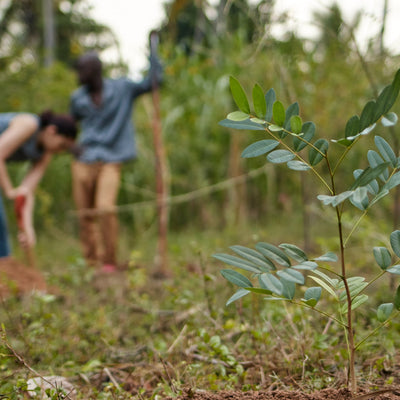
Once the species are selected, the seeds are germinated and nurtured into healthy seedlings in nurseries. These seedlings are cared for until they are ready to be transplanted into the fields. Site preparation follows, focusing on optimising the growing conditions for both trees and crops, enhancing soil structure, improving water retention, and preparing planting areas to ensure long-term success. The actual planting process is carried out by trained workers who ensure proper spacing and alignment, allowing both the crops and trees to coexist without competition.

Continuous monitoring and verification are essential components of the project’s success. Advanced site technologies are employed to track the health of the trees, measure CO2 sequestration, and assess improvements in biodiversity. This ongoing monitoring helps ensure the sustainability and effectiveness of the agroforestry system.

Project details

Where it is: Nippes Department, Haiti
Why plant in Haiti
Tree cover loss in Haiti

Tree cover loss in Haiti, from Global Forest Watch (2024).

See the latest on Global Nature Watch

UN Sustainable Development Goals

The United Nations Sustainable Development Goals are 17 shared goals for people and the planet, set for 2030. This project contributes to these:
See all 17 goals

Impact figures
0.4 kgCO₂ captured a year for every $1
0.002work days

Gift trees in this project

$3 a tree, with a certificate on the day you pick.

Gift trees here