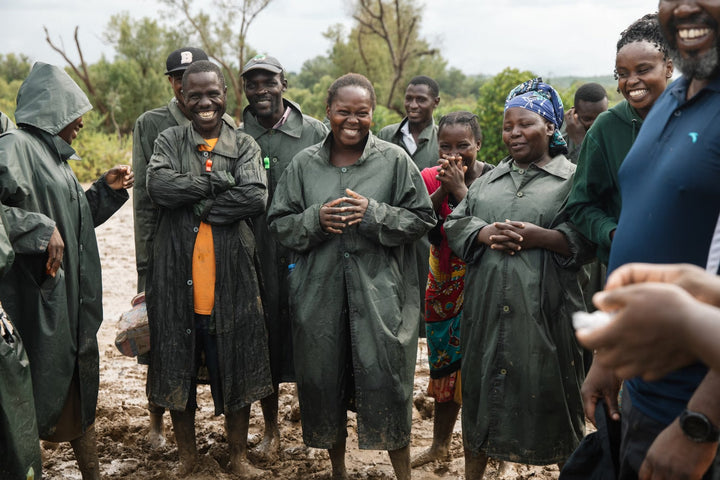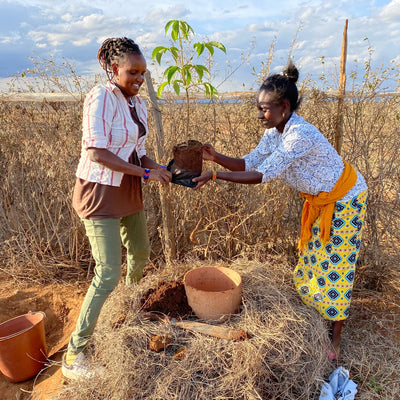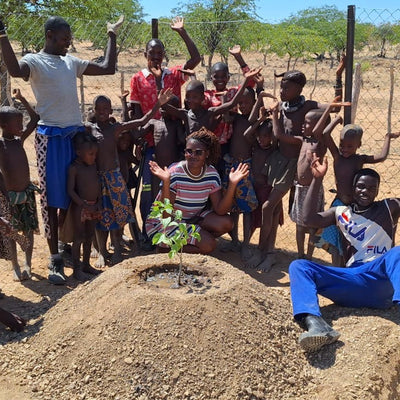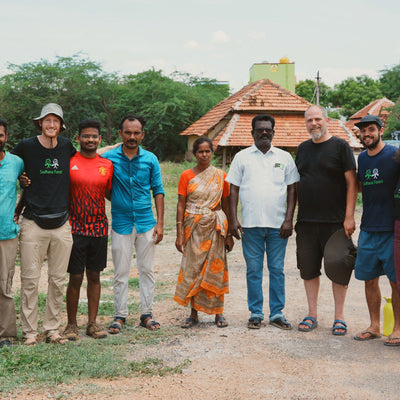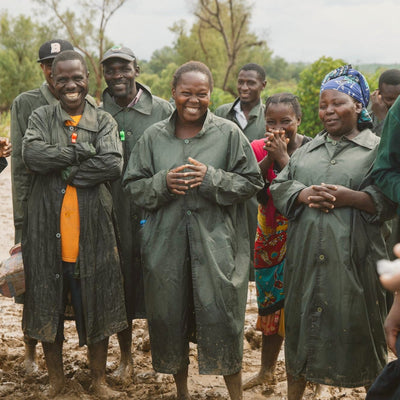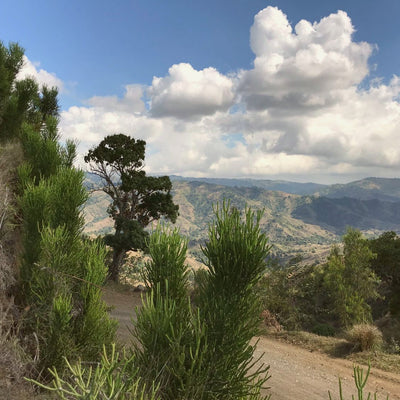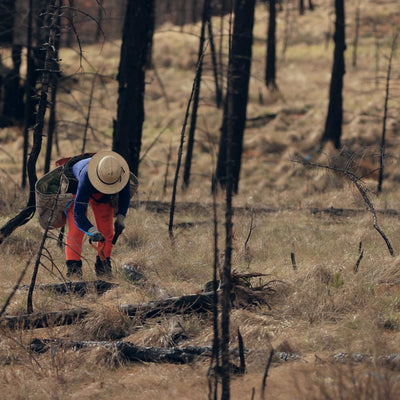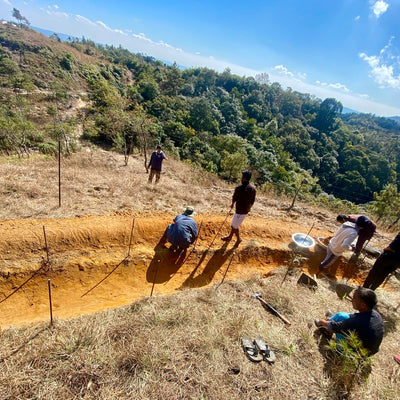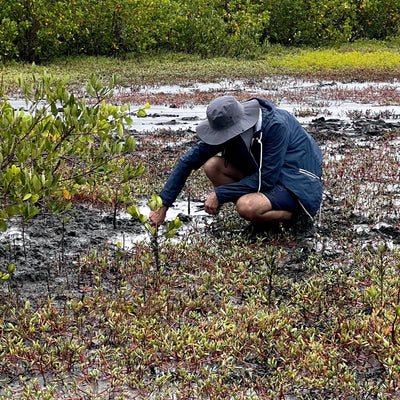
Between January and August 2026, crews planting with Mother Trees in Haiti held six planting days at five sites: Mercy, Vialet, Dolin, Haut Paillant and Saint Etienne. Greenr Gifts trees bought from September 2025 to June 2026 were part of these plantings.
Much of the work started with fences. At Mercy in January and Dolin in March, the crews' notes describe the day simply as fencing the land. They planted bayahonde and thousands of candelabra cactus, and the photos from Dolin show a long green line of cactus going in along the edge of a field.

Why start with a fence
The planting notes don't say why, but a likely reason is animals. The anthropologist Timothy Schwartz, writing from household surveys in other parts of Haiti, notes that farmers turn their livestock loose in their gardens after the harvest to feed. When a family wants to keep a young tree that has come up near the house, they may fence it off from the goats.
A planted fence keeps growing. Bayahonde, the Haitian name for Prosopis juliflora, a kind of mesquite, is the country's main firewood tree, and it is usually thorny: in a trial published in 1993, researchers in Haiti searched for thornless trees that goats would leave alone. Siwel, the red mombin that went in at Saint Etienne in August, is one of the trees most used for living fences. A large cutting pushed upright into the ground takes root and grows into a fruit tree.

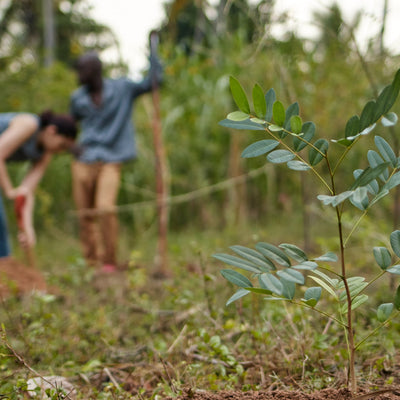
At Vialet, a crew of ten fenced a hillside plot and then planted mombin, cacao, coffee and avocado trees, with pigeon peas sown between them. At Haut Paillant, fifteen planters set out sour orange, papaya, lemon, coconut and breadfruit among pigeon peas and cassava. Their note for the day: the agroforestry system is followed on this plot. In July and August, crews at Saint Etienne added pigeon peas, moringa, siwel, mombin and cedar.

What pigeon peas do
The records count 95,500 pigeon peas sown at three of the sites. In Haiti they are called pwa kongo, and they are one of the crops families lean on in hard years. Their roots go deeper than cassava's. In a drought the plants drop all their leaves and wait, then come back when the rain returns. They yield through the year, and farmers sell about as much as they eat.
They also feed the soil. Like other legumes, pigeon peas take nitrogen from the air. In one trial in northern India, long-season pigeon peas fixed up to 200 kg of nitrogen per hectare over 40 weeks. That is about as much nitrogen as nearly nine 50 kg sacks of urea fertiliser, on an area the size of one and a half football pitches. The leaves they drop add organic matter, the roots break up hard ground, and a good cover of plants protects the soil from wind and rain.
The dry peas hold 14 to 30 g of protein per 100 g, the leaves feed animals, the stalks burn as kitchen fuel, and honeybees visit the flowers for nectar. For a project built around beekeeping, that last one counts.
Where Haiti's trees are now
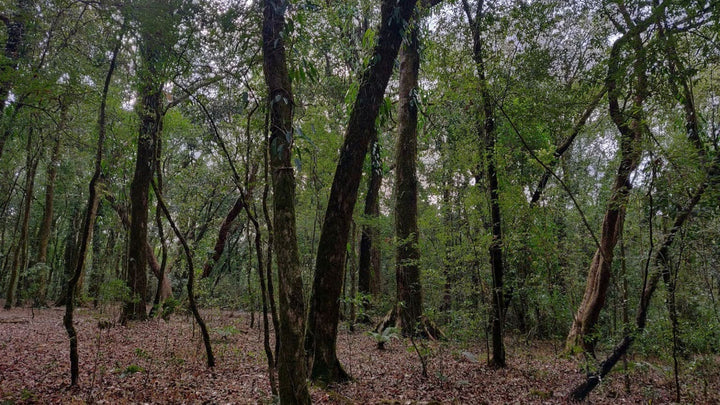
You may have read that Haiti has only 2% forest cover. Researchers who went looking could not find where that number came from. The real picture is starker in one way and more hopeful in another. Old-growth forest is almost gone: a 2018 study in PNAS found it fell from 4.4% of the land in 1988 to 0.32% in 2016, and 42 of the country's 50 highest mountains had lost all of theirs. Yet satellite mapping puts about a third of Haiti under trees, much of it in family wood lots and farms where trees grow among crops.
The land in between is the problem. A 2025 study using nearly 30 years of satellite images found that more than half of Haiti's land is bare, abandoned farmland, worn out by a century of hard use. And farmers face more than tired soil: in October 2025 Hurricane Melissa's floods washed away about 90% of the fields around Petit-Goâve, in the West department. Fenced plots of fruit trees, pigeon peas and cassava are one way of turning tired ground back into working farms.
Trees are bought in pooled monthly batches, so these photos show plantings our trees were part of, not any one person's tree. See the project.
Sources: Greenspark planting records for the Mother Trees Haiti project (January to August 2026); Timothy Schwartz, "Cropping strategies in Haiti" (May 2019); Wojtusik et al., "Cloning of erect, thornless, non-browsed nitrogen fixing trees of Haiti's principal fuelwood species", Agroforestry Systems (1993); TRAMIL, Prosopis juliflora; J. Morton, Fruits of Warm Climates: Purple Mombin (1987); Orwa et al., World Agroforestry, Agroforestree Database: Cajanus cajan (2009); Hedges et al., "Haiti's biodiversity threatened by nearly complete loss of primary forest", PNAS (October 2018); Maertens & Stork, "The real story of Haiti's forests" (October 2017); NASA, "Hispaniola's changing forests" (May 2025); AP via TheGrio, "A town in southern Haiti mourns its own" (November 2025).