Mawsynram, in the Khasi Hills of Meghalaya, gets about 11,900 mm of rain in an average year, and nearby Sohra, also called Cherrapunji, about 11,400 mm. If none of it drained away, a year's rain would stand nearly 12 metres deep, as high as a four-storey building. That is nearly twenty times what falls on London.
Yet both places run short of water every winter. In an average December, Sohra gets about 10 mm of rain. London gets more than five times as much.
The hills can’t hold the rain
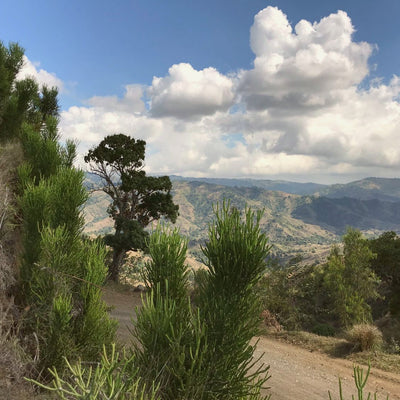
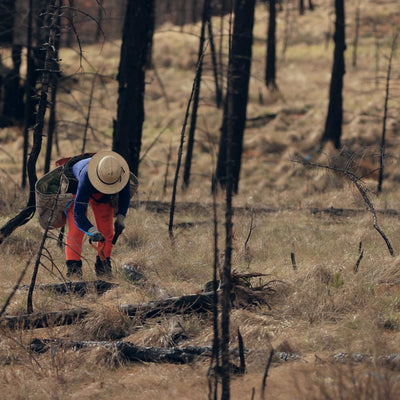
Between 70 and 90 per cent of the year's rain falls from June to September, and almost none from November to February. The hills can't hold it. The slopes are steep, and the rocky ground around Sohra lets little water in. Scientists who studied a catchment near Sohra found that clearing the forest had degraded the soil, and that water runs off as soon as heavy rain begins. Meghalaya is still losing forest: about 84 square kilometres between 2021 and 2023, roughly 12,000 football pitches.
More homes, homestays and hotels on the Sohra plateau now draw on the same springs. And the rain is changing: a recent study found fewer rainy days, with more rain arriving in short, heavy bursts that run off. This year, by mid-September, East Khasi Hills had received less than half its normal monsoon rain.
That matters because most of Meghalaya drinks from springs. About 80 per cent of villages rely heavily on them, and a paper from the state's basin development authority estimates that about half have dried up or lost flow.
Winter in Sohra
By January or February the streams are low. Ten years ago, Al Jazeera found people in Sohra walking downhill for hours to reach springs and hauling buckets back up in wooden carts, while the taps ran only a few hours a day.
Today many families buy water from tankers between November and March. Carmer Malngiang, an activist in Sohra, told India Water Portal that 500 litres can cost nearly ₹1,000, about $10.65. That is more than three days' wages under India's rural jobs scheme, which pays ₹300 a day in Meghalaya. At the UN's 50 to 100 litres per person a day, it keeps a family of five going for a day or two.
What the groves knew
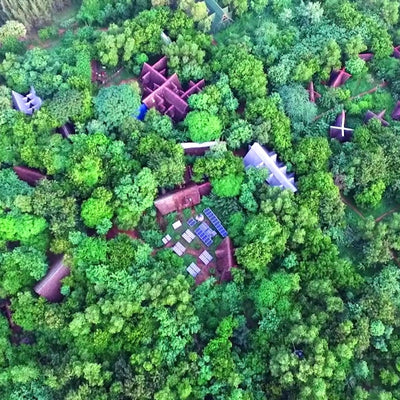
The Khasi have long known how to keep water in these hills. Their sacred groves, law kyntang, were often set aside on the slopes where springs rise. Nothing may be taken out of them: no wood, no hunting, no grazing. About 79 groves survive in Meghalaya, covering close to 9,000 hectares.
The best known is at Mawphlang, about 25 km from Shillong, a dark block of old forest among open, grassy hills. People living near it say its stream has never dried up, even in the driest months. "We don't enter the forest every day, but we feel it in the water," Daphi Lyngdoh told India Water Portal.

Holding the rain on the slope
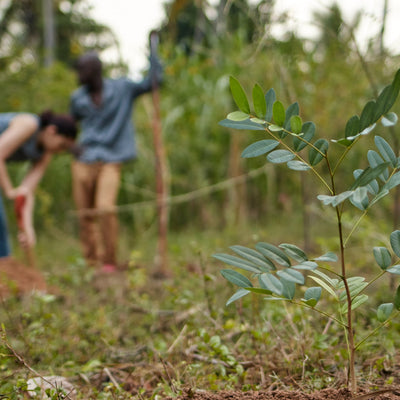
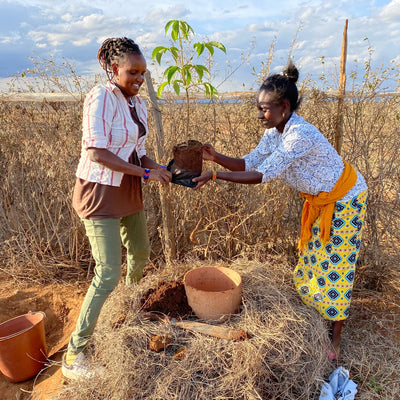
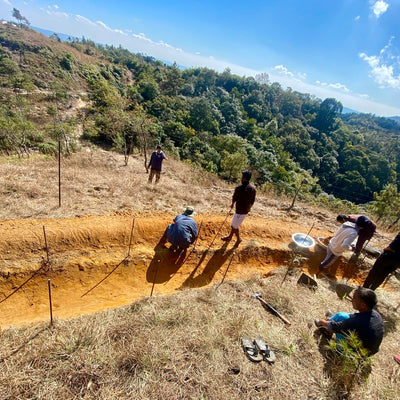
Sadhana Forest's Khasi Hills centre is near Mawsynram, the wettest corner of these hills. Its main tool is the on-contour swale: a shallow trench dug level along the slope, with the loose soil piled just below it as a low bank. Rain that would race downhill collects in the trench and has time to soak in.
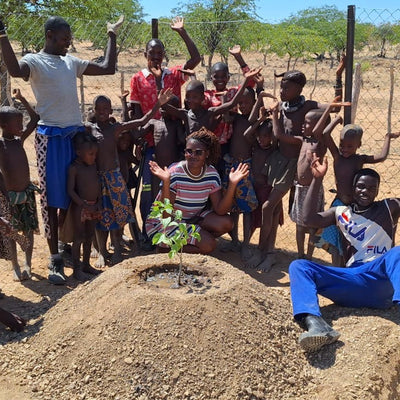
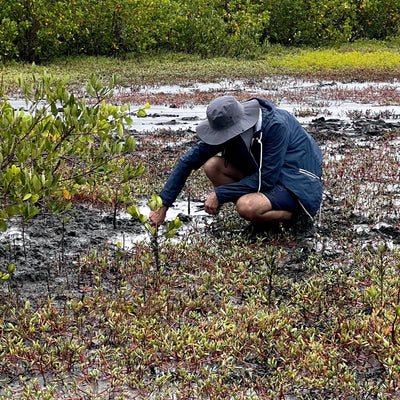
Nitrogen-fixing plants go in first to feed the soil, with vetiver grass to hold the bank by its deep roots. Food trees and native species follow as the soil improves. Sadhana Forest says the aim is water all year round, less erosion and a living from the forest, and that it helps communities widen and protect their forests, in the spirit of the groves.
All training is free, at the centre, in schools and on people's own land. How a swale is marked out, with an A-frame and a plumb line, is in our post on how the work began.

A swale does on one slope what a grove does for a valley. It gives the rain time, so more of the monsoon stays in the ground instead of rushing past.
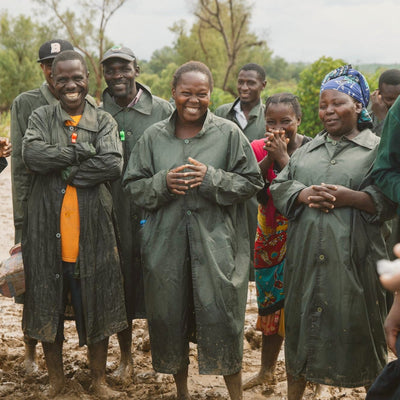
Sadhana Forest trains communities to restore land across Meghalaya. See the project.
Sources: Sadhana Forest, "East Khasi Hills Immersion Center" and "Sadhana Forest Meghalaya"; India Water Portal, "Why the wettest hills of India are running dry" (March 2026) and "Inside Meghalaya's sacred groves" (May 2026); India Meteorological Department normals for Cherrapunji, 1991-2020 (via Wikipedia); Met Office, Heathrow averages 1991-2020; Starkel et al., "Rainfall, runoff and soil erosion in the extremely humid area around Cherrapunji", Geographia Polonica (2002); India State of Forest Report 2023 (via ThePrint, December 2024); Paul & Roy, Theoretical and Applied Climatology (via DT Next, September 2026); Down To Earth, "Meghalaya has India's highest rainfall deficit throughout monsoon 2026" (September 2026); Al Jazeera, "'World's wettest place' suffers water shortage" (January 2016); SCC Online, "State-wise wage rates revised" (July 2026); United Nations, Water; Reserve Bank of India reference rate, 9 November 2026 (via MSEI); BirdLife International, Mawphlang Sacred Grove.