Running down the middle of Florida is a long, narrow ridge of white sand. As the seas rose and fell over at least a million years, this ridge stayed above water, an island while much of the land around it was flooded. Hilary Swain of Archbold Biological Station has said that, like any isolated island, it holds many species found nowhere else on earth.
How an island makes its own species
Millions of years ago, as the southern Appalachian Mountains wore down, rivers carried their quartz sand to the sea, and coastal currents swept it south into dunes. Each time the sea fell back, a new line of dunes was left behind. The Lake Wales Ridge is the largest and oldest of these old dune ridges: about 116 miles long but only 5 to 10 miles wide, narrow enough to walk across in a morning.
Life on it was cut off, by the sea or by the wetlands around it. The sand holds little water and few nutrients, summers are hot and wet, winters dry, and fire comes often. Plants and animals that could cope with all of that, and couldn't easily leave, slowly became their own species. By one count, 36 rare plants and animals on the ridge are found only there or almost only there, or only in Florida's scrub and sandhill.
Some have relatives a continent away. Long ago Florida's dry uplands were linked to the dry country of the American West, as far as California and Mexico. That is why the Florida scrub-jay's closest relatives are western scrub-jays, and why the ridge's jujube plants have cousins in the desert Southwest.
What was lost, and what was saved
For a long time the ridge was too dry for most crops and too poor for cattle. Then, in the 20th century, it was logged, and by the 1950s nearly all the original timber was gone. Citrus growers moved in after freezes further north, founding towns with hopeful names like Frostproof. Housing followed. By 2008, scientists estimated that 83% of the ridge's scrub and sandhill had been lost.
The state forest is part of what was saved. Between 1984 and 1986 Florida bought 13,746 acres around Lake Arbuckle, some of the best scrub left in central Florida, and this became the heart of today's state forest. In 1988, Polk County's commissioners turned down a sand mine on a scrub site northeast of Frostproof. The land was later bought by the state as the Walk in the Water tract and added to the forest.
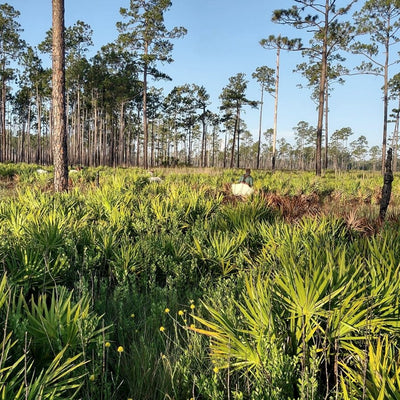
Lake Wales Ridge State Forest covers 26,713 acres of this ridge in Polk County, in four separate tracts. The Florida Forest Service says its scrub may have the highest concentration of rare and endangered plants in the continental United States. The forest is home to 33 plants and 36 animals with threatened or endangered status, including the Florida scrub-jay, a bird found only in Florida's scrub, and the sand skink, a small lizard that swims through the sand and leaves an S-shaped trail. Nearly legless, the skink tucks its tiny one-toed front legs into grooves along its body as it moves just under the surface.

A bird that needs fire
The Florida scrub-jay is the only bird found in Florida and nowhere else. It lives in families: a breeding pair plus helpers, usually their grown young from earlier years, who help raise the chicks and guard the territory. Pairs with helpers tend to raise more young. The jays also bury acorns and come back for them later.
They need scrub oaks kept low, mostly between about 3 and 6.5 feet tall, roughly from waist height to just over your head. Without fire, the oaks grow too tall and thick for them. Florida's wildlife commission says scrub-jay numbers have fallen by 90% in the past century. Even on protected public land, a survey by Archbold found they fell by as much as a quarter between the early 1990s and 2010, mostly because the land wasn't burned often enough. Jay Watch volunteers count the jays, and their counts help managers plan where to burn next.
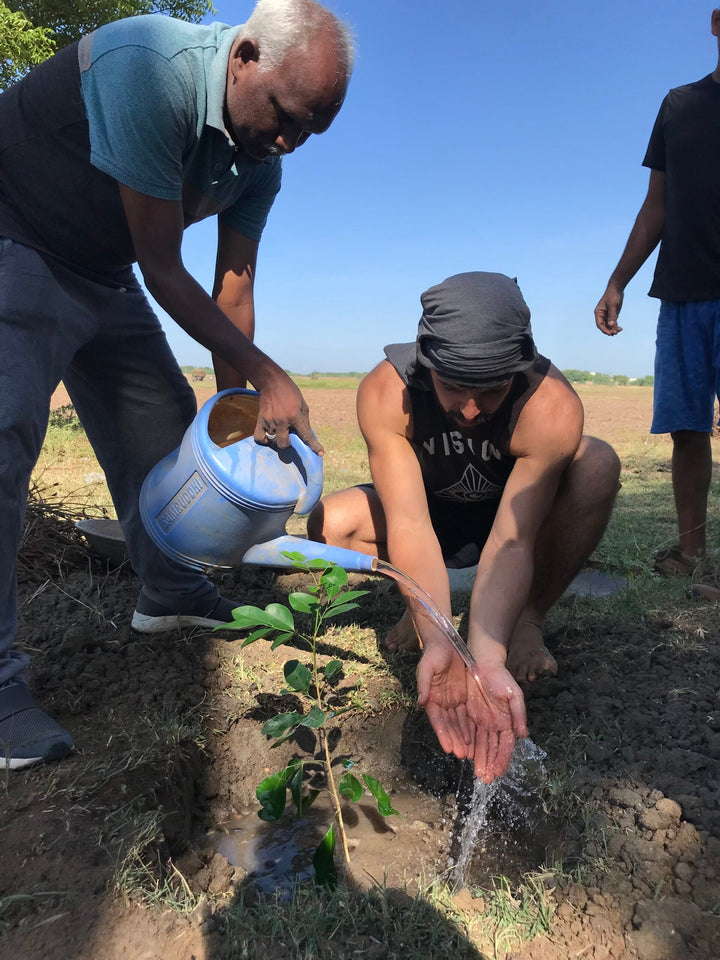
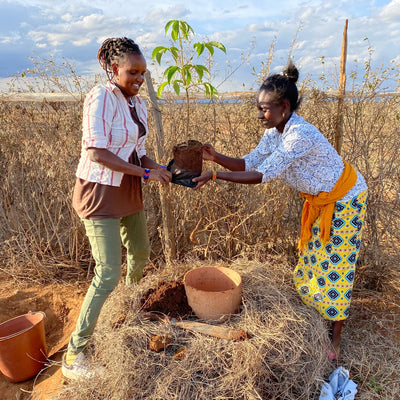
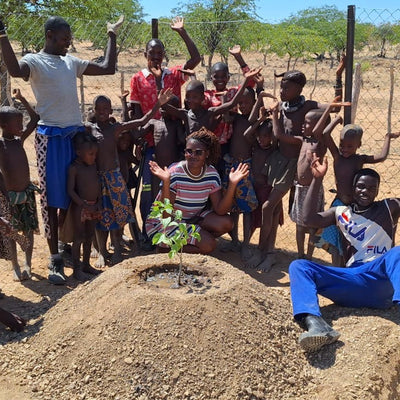
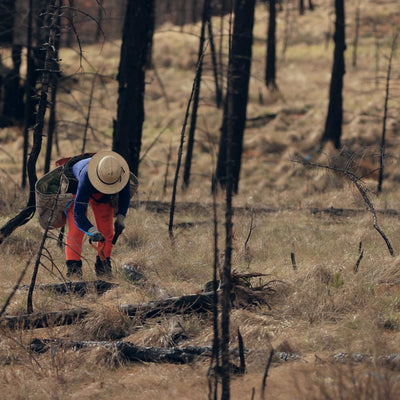
This is where Greenr Gifts trees in Florida are planted, with American Forests. The crews plant longleaf pine and South Florida slash pine. The forest is also part of the Kissimmee Basin, so bringing back trees here helps hold rain on the land and keep the water that runs off it cleaner.

Sources: Florida Forest Service, "Lake Wales Ridge State Forest"; Voice of America, "Sandy Strip of Florida Land Holds Ancient Secrets" (2009); Greenspark, "Revitalising Ecosystems Through Terrestrial Restoration" (February 2025) and its project description for American Forests Florida; Hilary M. Swain and Patricia A. Martin, "Saving the Florida Scrub Ecosystem: Science and Serendipity", Lincoln Institute of Land Policy (2012); Florida Natural Areas Inventory, Sand skink field guide (2001); Florida Fish and Wildlife Conservation Commission, Florida scrub-jay; National Audubon Society, Florida Scrub-Jay.