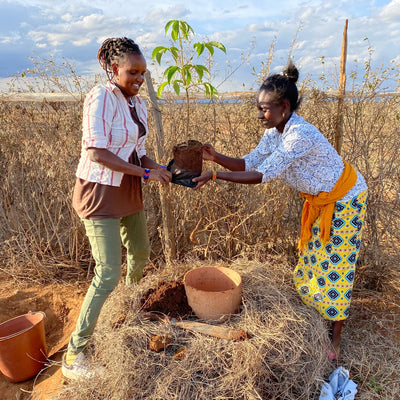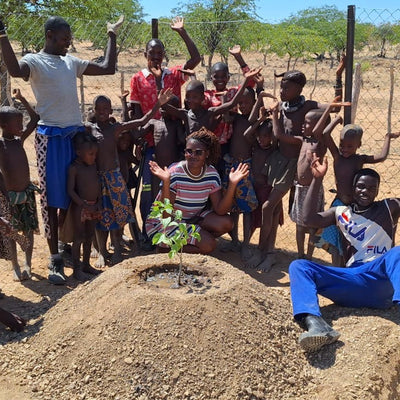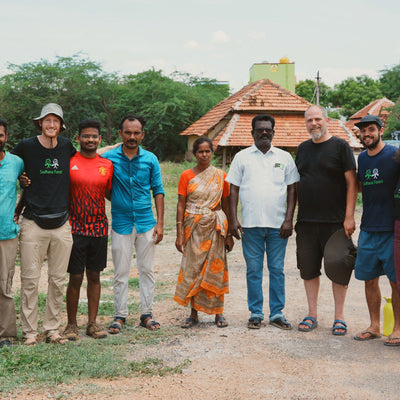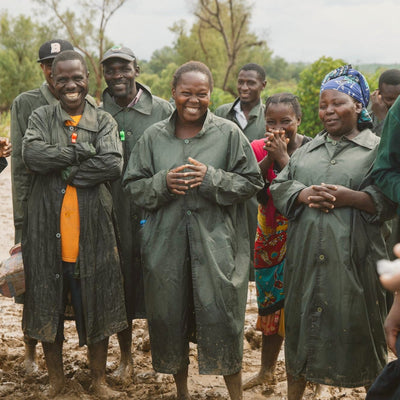
Sadhana Forest's work in Meghalaya began in 2020 with two old buses, turned into simple places to live and teach.

The team took them across rural Meghalaya, showing people how to hold water and soil on the land and how to replant it. Over two years they reached 25 villages and trained people from 400 villages.
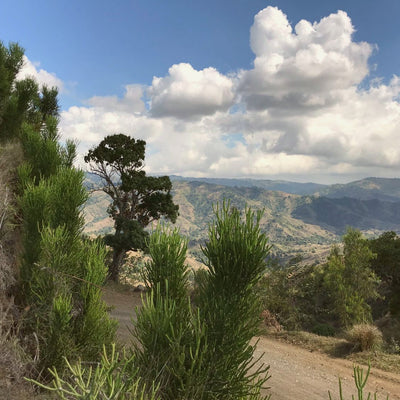
That work led to three permanent training centres, in the Garo, Khasi and Jaintia Hills. The Garo Hills centre sits on the way to Nokrek National Park. The Khasi Hills hold some of the wettest places on Earth. In the Jaintia Hills, the team helps restore land damaged by mining.

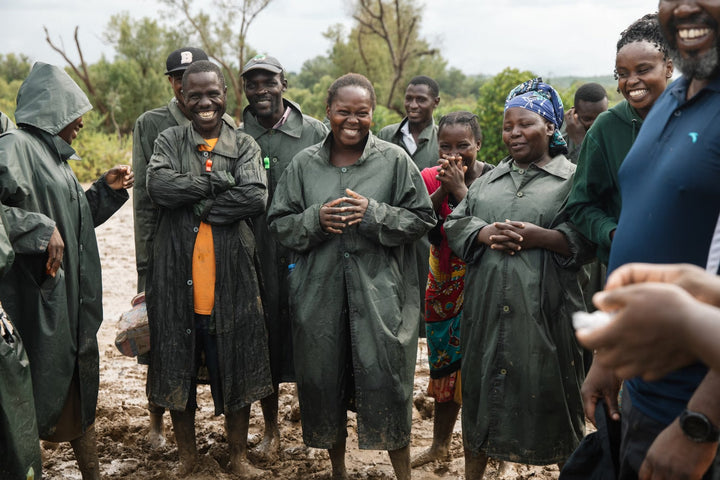
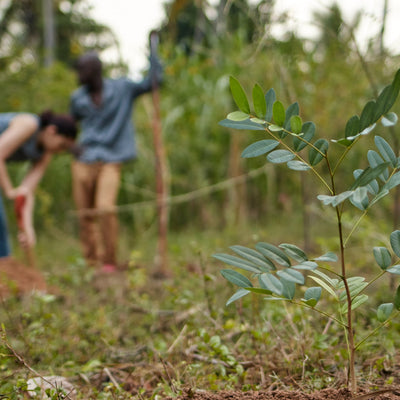
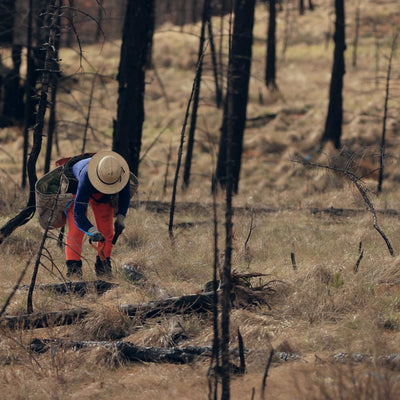
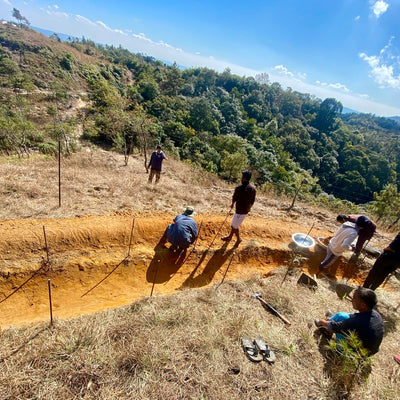
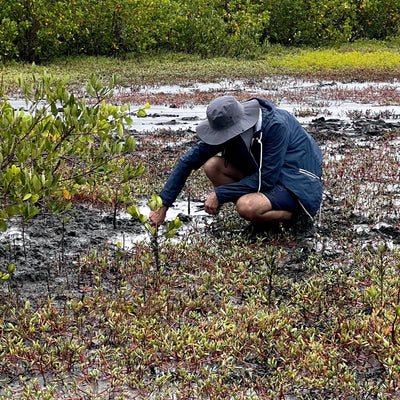
All training is free. People learn by doing: marking contours, digging swales, building bunds and planting native food trees, at the centres, in schools and on their own land.

The wettest hills that run dry
Mawsynram, in the Khasi Hills, gets about 11,900 mm of rain in an average year, and nearby Sohra, also called Cherrapunji, about 11,400 mm. That is nearly twenty times what falls on London.
Yet both places run short of water every winter. Most of the rain falls between June and September, and very little from November to April. On steep, rocky slopes that have lost much of their forest, the monsoon runs straight off the hills instead of soaking in. By January or February the streams are low, and families in Sohra buy water from tankers. One activist there told India Water Portal that 500 litres costs nearly ₹1,000, about $10.65. The UN puts a person's daily needs at 50 to 100 litres, so that load keeps a family of five going for a day or two.
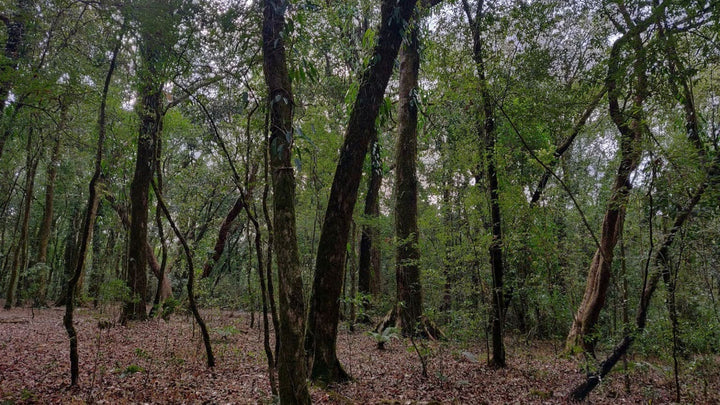
The Khasi have long known how to keep water in these hills. Their sacred groves, law kyntang, were often set aside on the slopes where springs rise, and nothing may be taken out of them. People living near the grove at Mawphlang say its stream has never dried up. A swale does a small part of the same work: it catches the rain on the slope and gives it time to sink into the ground instead of racing downhill.

Land after coal
Most of the mining in the Jaintia Hills has been for coal, from what are called rat-hole mines. A pit is sunk to the coal seam, then tunnels so low that miners crawl on their knees are cut sideways into it.

When water meets the sulphur in exposed coal, it turns acidic. Many rivers in the Jaintia Hills have turned acid, and in mining areas they run brown to reddish orange. In 2014, after people downstream in Assam complained that the Kopili river was being poisoned, India's National Green Tribunal stopped coal mining across Meghalaya. Ten years later, a committee reporting to the state's High Court counted about 26,000 abandoned rat-hole mines in East Jaintia Hills, and not one had been closed.

The Jaintia Hills centre teaches agroforestry, organic farming and ways to earn a living from the forest, as alternatives to mining.
Sadhana Forest trains communities to restore land across Meghalaya. See the project.
Sources: Sadhana Forest, "Sadhana Forest Meghalaya" and its East Garo Hills, East Khasi Hills and Jaintia Hills centre pages; India Water Portal, "Why the wettest hills of India are running dry" (March 2026) and "Inside Meghalaya's sacred groves" (May 2026); Met Office, Heathrow averages 1991-2020; United Nations, Water; Reserve Bank of India reference rate, 9 November 2026 (via MSEI); Down To Earth, "Meghalaya suspends rat-hole coal mining" (May 2014) and "NGT ban on rat-hole mining in Meghalaya to continue" (June 2014); Mongabay-India, "Meghalaya's black holes" (November 2018); News Arena India, "26,000 Meghalaya coal mines open despite decade-old ban" (May 2024); India Water Portal, "Why is Lukha feeling blue?"; Down To Earth, "Mined to death: an elegy for the rivers of Meghalaya"; photos from Wikimedia Commons (CC0).