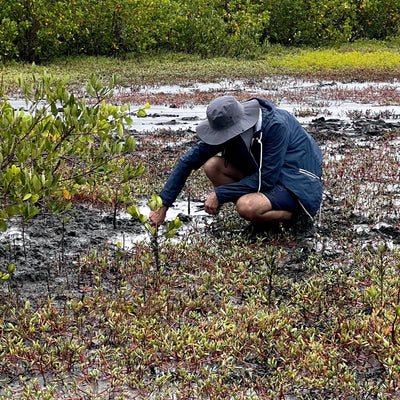
When Sadhana Forest began at Auroville in December 2003, its 70 acres were bare, eroded land. Monsoon rains had washed the fertile soil away long before.
A plateau that couldn't hold the rain
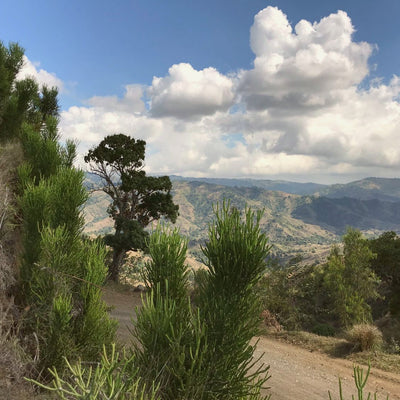
The damage was old. This plateau, about 12 km north of Puducherry, was once covered in tropical dry evergreen forest, which was lost over the last 200 years to timber cutting and farming. When Auroville was founded in 1968, its land was eroded and almost treeless, with only some palms and a few banyans. The topsoil was gone, and the rains had cut deep canyons into the red laterite underneath. Auroville's foresters remember that soil as "hard as iron". The land was good for little more than grazing goats.
The rain itself is part of the problem. The area gets about 1,250 mm a year, but most of it falls in the northeast monsoon from October to December, and up to half a year's rain can come in ten days. On bare, hard ground, water that heavy doesn't soak in. It runs off, carrying soil with it.
So the first work was about water. The team built check dams, earth dams, bunds, swales and ponds, so that rain would stop running off and soak into the ground instead.

Catching rain where it falls
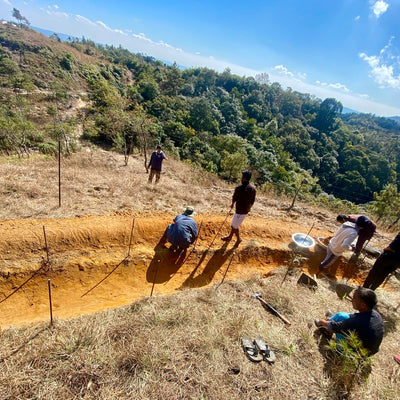
A swale is a long, shallow ditch dug along the contour of a gentle slope, so that it stays level from end to end. Rain running downhill fills it, and because the water has nowhere to flow, it sinks slowly into the soil. Sadhana Forest's aim is zero run-off: every drop that falls on its land should stay there.

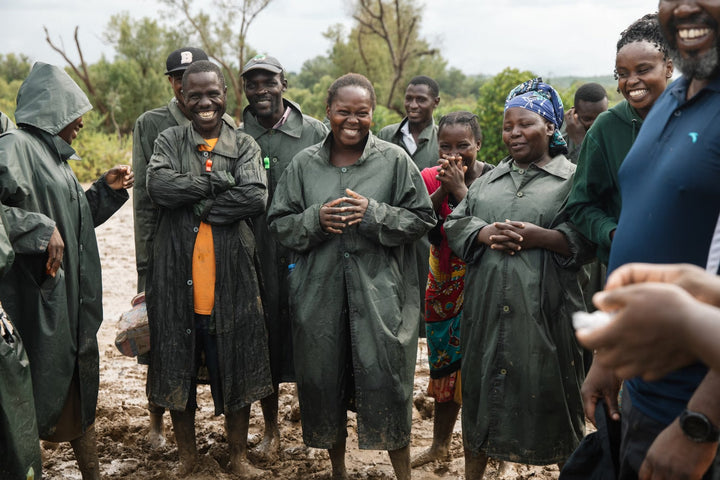
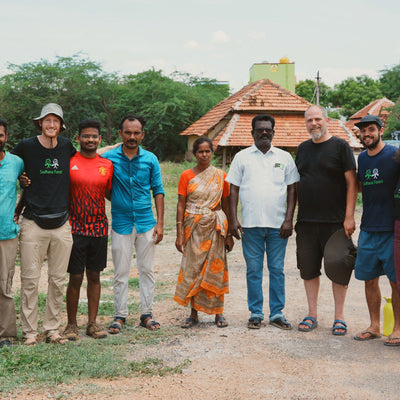
Sadhana Forest is run entirely by volunteers: each year more than 1,500 people from 50 nationalities come to live on the land, in a vegan community. By 2015, Sadhana Forest reported more than 20 km of trenches and eight earth dams. In May 2024, researchers from ETH Zurich in Switzerland spent three weeks burying electrodes along one swale to measure how the water moves underground.
How far the water had fallen
In the first five years, the water table rose by 6 metres. In 2003, the water under Sadhana Forest's land lay on average about 8 metres below the surface, deeper than a two-storey house is tall. A few years of earthworks later, it was about 1.8 metres down, the height of a tall adult. Wells in four nearby villages, dry for 15 to 20 years, began to give water all year round.
That happened while water was falling across the region. In 1973, Puducherry's groundwater was described as "prolific". By 2013 it was classed as over-exploited, and between 2000 and 2010 the levels of all its aquifers dropped by 5 to 14 metres, as more and more tube wells pumped water for farms. A 2017 study found that the region's Vanur aquifer had been drawn down as far as 50 metres below sea level, less than 20 km from the coast.
Today the earthworks hold more than 50,000 cubic metres of rainwater each year, enough to fill about 20 Olympic swimming pools.
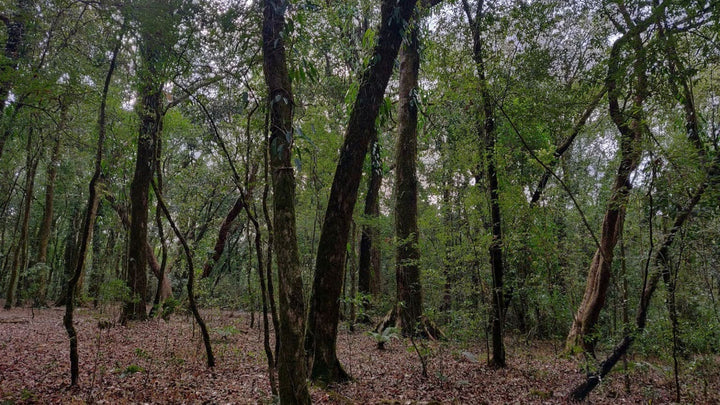
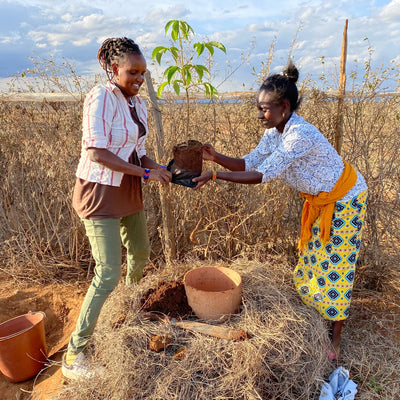
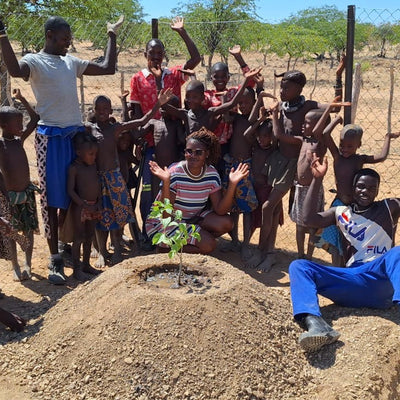
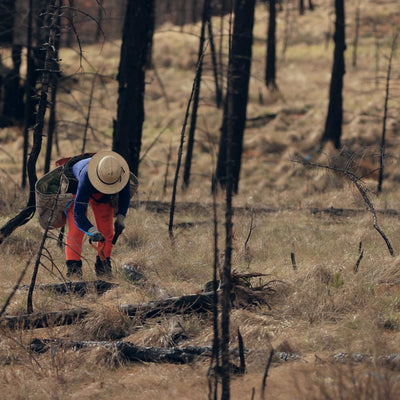
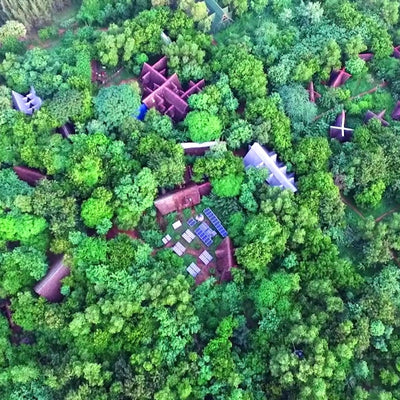
With water in the soil, the forest could grow. Sadhana Forest has planted over 27,000 trees at Auroville, and about 100,000 more have come up on their own. Almost three quarters of the land is now under native species.

Sadhana Forest is restoring native forest at Auroville. See the project.
Sources: Sadhana Forest, "Sadhana Forest Auroville" (centre page) and "Research"; Sadhana Forest India, Permaculture Global (last updated October 2015); Frignoca, McCarthy, Rozin and Reitsma, Interdisciplinary Environmental Review (2021); P. Blanchflower and M. Demont, Trees of South India, excerpted in Scroll.in (February 2024); Auroville Forest Group, "Forest Group report", Auroville Today (August 2023); "Towards an integrated water management strategy for the bioregion", Auroville Today (July 2015); A. Vincent and S. Violette, "Why seawater intrusion has not yet occurred in the Kaluvelli-Pondicherry basin", Hydrogeology Journal (2017); OhmPi, "Groundwater recharge and sustainable extraction through resilient forest communities" (2024).