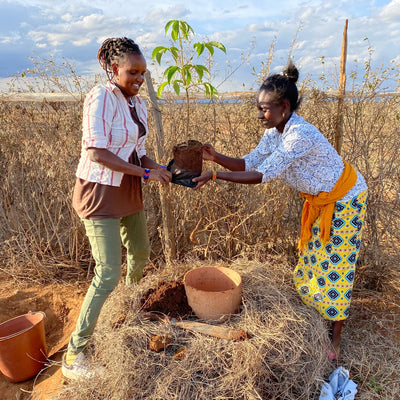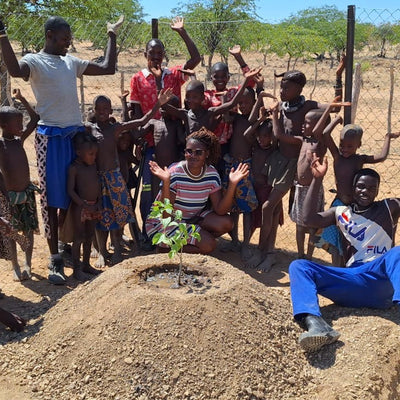
Oruseu is a small hamlet in Namibia's Kunene Region, one of the driest parts of southern Africa. It is home to Himba families, semi-nomadic herders whose herds have been hit hard by drought.
Dry years for herders
A typical Himba meal is maize porridge with sour milk, milk left to ferment in a calabash, eaten morning and evening. When drought takes the grass, it takes the milk too.
Researchers working around Okongwati, in the same part of Kunene, followed Himba families through the dry years from 2016 to 2019. By the end of 2019, rain at Opuwo, the regional capital, was 51 percent below normal. Over those four years food insecurity rose by 43 percent, people ate a narrower range of foods, and sour milk was the food that fell away.
Then it got worse. In May 2024 Namibia declared a drought emergency. For October 2024 to March 2025, an estimated 78,495 people in Kunene faced extreme food insecurity: nearly two in three of the region's 120,762 people.
Water, power and work
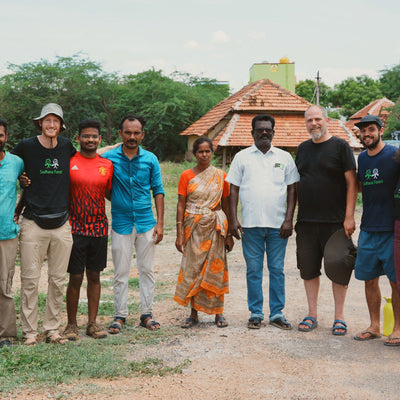
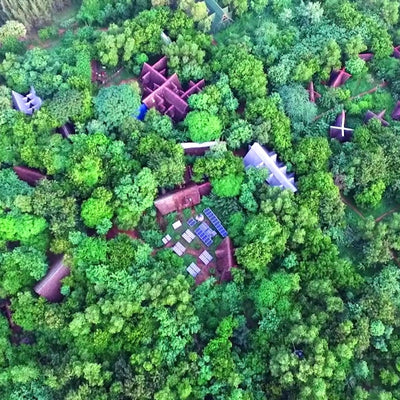
Sadhana Forest came in 2023, after long talks with the villagers, who offered land for a centre. The 18 hectare campus has a nursery, a borewell and solar power. It gives free drinking water and phone charging every day, the only reliable water and electricity for a long way around.

That counts for more than it sounds. At the 2011 census, only 29 percent of households in Epupa Constituency, where Oruseu lies, had safe water, and 7 percent had electric light.
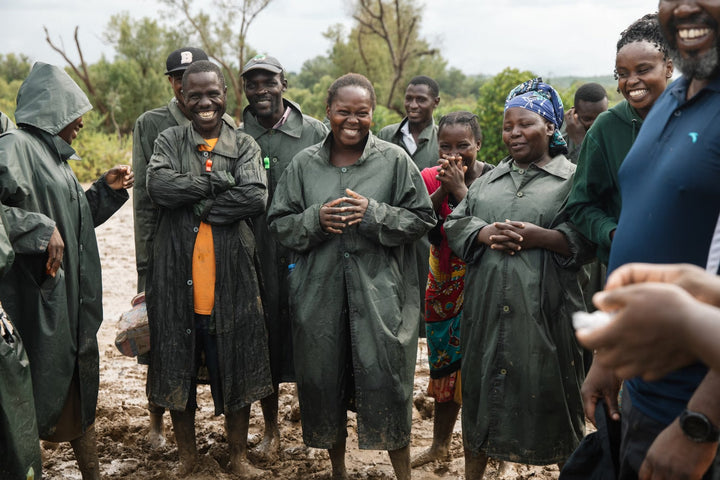
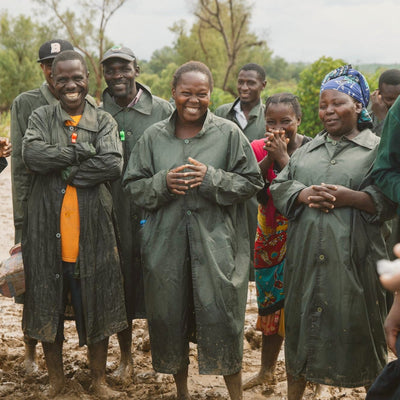
The centre is run almost entirely by people from Oruseu, and it is the only work on offer within a day's walk. In that same census, 77 percent of households in Epupa lived mainly from farming and just 6 percent from wages. The centre makes a point of hiring women, even in roles they don't usually take: it has one of the only watchwomen in the whole Kunene Region.

Why a baobab
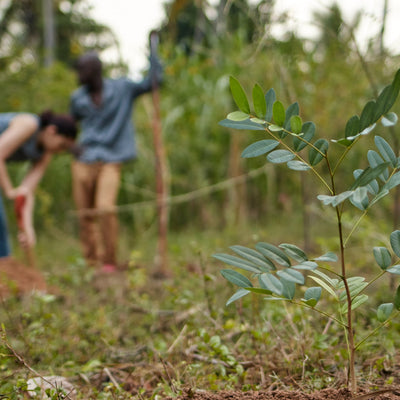
The team plants native trees such as a local moringa and the baobab, which gives good, nourishing fruit. Sadhana Forest says a baobab can live up to 3,000 years. The oldest one dated by radiocarbon, the Panke baobab in Zimbabwe, was about 2,500 years old when its stems collapsed in 2010 and 2011. Namibia has giants of its own: the Holboom, in the Nyae Nyae Conservancy, has a trunk 35 metres around and was dated at about 1,800 years.
The fruit is a large woody pod, with the seeds set in a whitish, powdery pulp. Gram for gram, that pulp holds about four times as much vitamin C as an orange. The species list in the centre's environmental assessment notes that the pulp is soaked in water to make porridge, and the leaves are eaten too.
It is a patient tree. A young baobab grows a swollen, carrot-like root to store water, and the earliest a seed-grown tree has been seen to flower is at eight years old. It does best with 300 to 500 mm of rain a year. Opuwo gets 285.
Young baobabs are also easy to lose.
The first tree planted in the community was a baobab.

Sadhana Forest works with Himba families in Kunene. See the project.
Sources: Sadhana Forest, "Sadhana Forest Namibia" (centre page); Excel Dynamic Solutions for Sadhana Forest Namibia, environmental impact assessment for reforestation in Oruseu (2023, with 2011 census figures for Epupa); Prall & Scelza, "The dietary impacts of drought in a traditional pastoralist economy" (2023); IFRC, Namibia drought emergency appeal (September 2024); The Namibian, "78 495 Kunene residents without food" (August 2026); Kunene Regional Council (2023 census); Patrut et al., "The demise of the largest and oldest African baobabs" (Nature Plants, 2018); PROTA, Adansonia digitata (2004); USDA FoodData Central, oranges, raw; Venter & Witkowski, "Where are the young baobabs?" (Journal of Arid Environments, 2013); Atlas of Namibia, "Rainfall patterns" (2022).