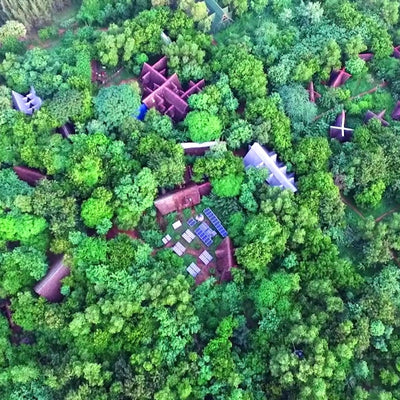
When Sadhana Forest began on its 70 acres at Auroville in December 2003, there were no birds or mammals on the land. Today the team counts over 90 bird species, along with wild boars, jackals, civet cats and porcupines.

In 2021, the journal Interdisciplinary Environmental Review published a study of how wildlife was returning. Sadhana Forest Auroville was the study site, and co-founder Aviram Rozin was one of the four authors.
The researchers compared parts of the land where planted native trees were thriving with parts where non-native acacia had come up instead. Their surveys recorded 75 bird species, 8 mammals, 12 reptiles, 5 amphibians and 55 kinds of invertebrates. Where the native plants grew, there were more birds, more invertebrates were caught, and more dragonflies, damselflies, butterflies and moths were seen.

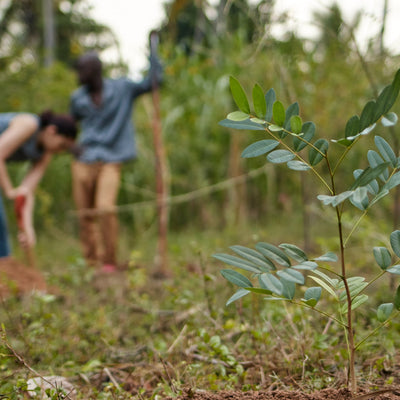
The animals help the forest in return. Sadhana Forest says they bring in seeds and keep nutrients moving through the soil, which helps the land recover. The team aims to plant all 166 tree species of the native dry evergreen forest.

Sadhana Forest is restoring native forest at Auroville. See the project.
Sources: Frignoca, McCarthy, Rozin and Reitsma, "Greater biodiversity in regenerated native tropical dry evergreen forest compared to non-native Acacia regeneration in Southeastern India", Interdisciplinary Environmental Review (2021); Sadhana Forest, "Sadhana Forest Auroville" (centre page).