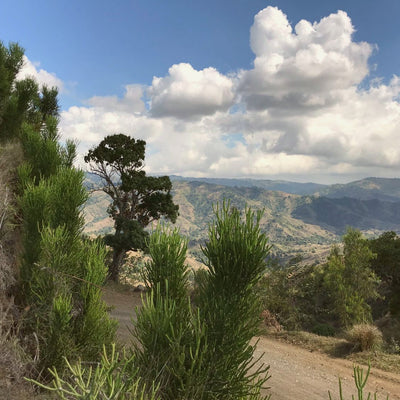
Virudhunagar district lies south of the city of Madurai, in southern Tamil Nadu. Its land has been heavily deforested, and the rains have become erratic, with drought after drought. Farming that depends on the rain is getting harder every year, and many people are leaving their ancestral villages to look for work in the cities.

Rain that comes all at once
Virudhunagar gets about 800 mm of rain in an average year. That is a little more than London. The trouble is when and how it falls.
Most of it comes with the northeast monsoon, in storms that blow in off the Bay of Bengal between October and December. The summer monsoon that waters most of India is highly erratic here, and from April to June the district is hot and dry, with days that pass 40 °C. Much of a year's farming hangs on about three months of rain.
When those months fail, so do the crops. After the 2022 northeast monsoon, Tamil Nadu declared parts of Virudhunagar and five neighbouring districts to be in agricultural drought, a status given where lack of rain had destroyed more than a third of the crop.
Wells can't make up the difference for long. In its 2009 report on the district, the Central Ground Water Board rated one block, Rajapalayam, as over-exploited, meaning it was using more groundwater than the rain puts back, and another as critical. In the mid-2000s, about six in ten hectares sown in the district had no irrigation at all.
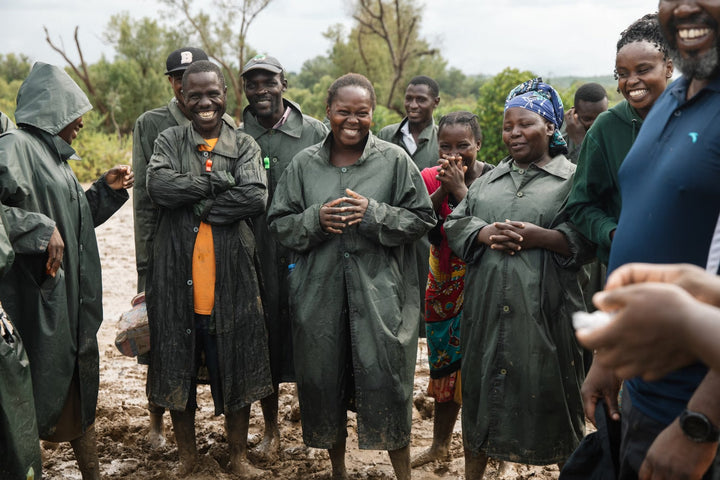
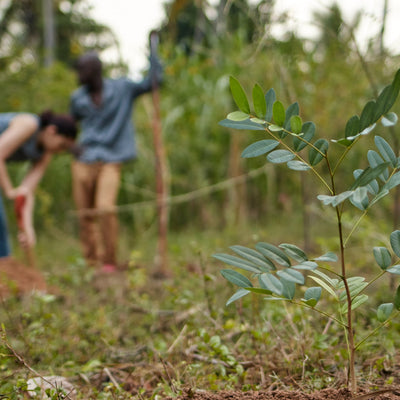
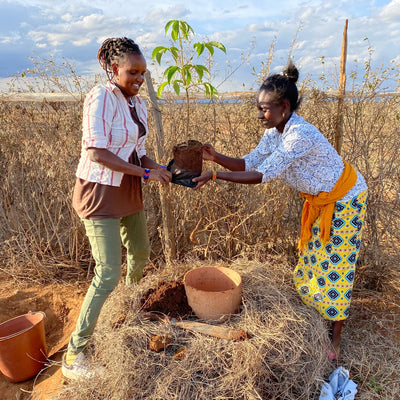
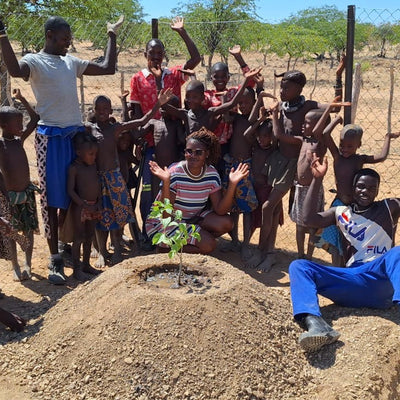
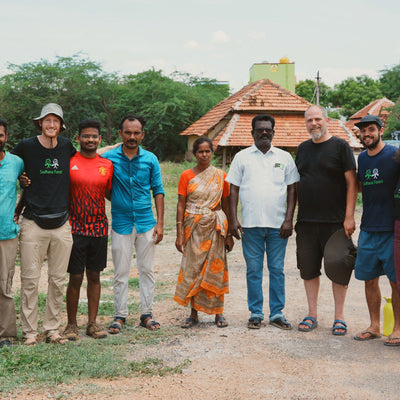
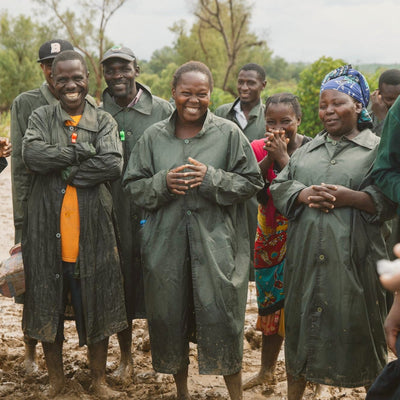
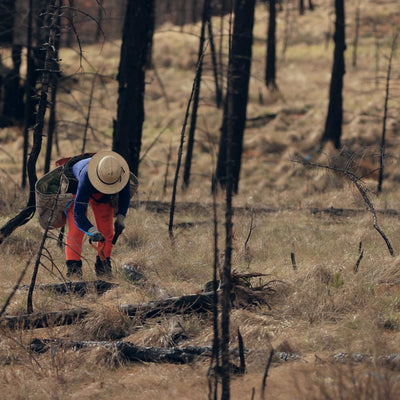
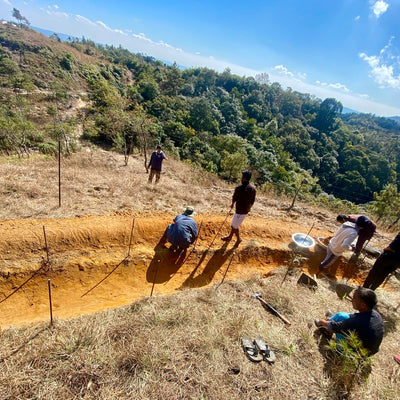
Sadhana Forest launched its project there in 2022. The team turned a second-hand bus into a mobile reforestation unit and began working with local people: planting native, drought-resistant trees that bear food, carrying out water conservation work, and running training in a rural area losing both its rain and its livelihoods.

Where people go instead
The district's dryness shaped its work long ago. In 1922, two young men from the town of Sivakasi, Ayya Nadar and Shanmuga Nadar, went to Calcutta to learn how matches were made. They came home and opened a match factory the next year.
Sivakasi became India's fireworks capital. It now makes nearly 90% of the country's firecrackers, and the trade employs around 800,000 people directly and indirectly. IndiaSpend describes it as an industry that grew out of "a rain-starved region with poor groundwater reserves and few options of agricultural employment."
Others leave the district altogether. Plant 4 India, Sadhana Forest's fellowship programme, writes that many houses in these villages stand empty as people move to city slums, and that the families who stay are often the ones who can't afford to go.
Why trees around homes
Sadhana Forest began in 2003 on 70 acres of eroded land in Auroville, on the Tamil Nadu coast. Years later, its founders decided to take what they had learned to malnourished rural communities living on barren land. It describes Virudhunagar, where it went in 2022, as one of the most drought-prone and malnourished regions of South India.
The bus came from experience. From 2020, a Sadhana Forest team had used a mobile unit to work in 25 villages in Meghalaya. In Virudhunagar, a refurbished 60-seater bus, parked in one village, became the team's kitchen, dormitory, bathroom and tool shed, with a water tank and solar panels.
The trees go in around people's homes. In a short video from May 2023, the team explains the aim: to help families restore their land, build resilience against climate change and have food for the long term.
Video: Sadhana Forest, a short film of the team laying the groundwork for the project (May 2023).
Plant 4 India says the work focuses on Dalit communities. Across rural Tamil Nadu, census data published in 2015 found that 73% of Dalit households owned no land and lived on casual labour. For a family without fields, the ground around the house may be the only place a tree can go.

Sadhana Forest plants food trees around homes in Virudhunagar. See the project.
Sources: Sadhana Forest, "New Mobile Reforestation Project in Virudhunagar" (June 2023), video on the new project (YouTube, May 2023), "Sadhana Forest Virudhunagar" (centre page) and "Our Journey"; Plant 4 India, "The Fellowship" and "Projects" (2023); Central Ground Water Board, District Groundwater Brochure, Virudhunagar (2009); Met Office, Heathrow climate averages, 1991-2020; DT Next, "6 districts declared agri drought affected" (July 2023); Madras Musings, "Ayya and Shanmugam who steered Sivakasi" (May 2025); Down To Earth, "Built to explode" (April 2026); IndiaSpend via Scroll, "In Tamil Nadu's fireworks factories" (April 2021); Deccan Chronicle, "Three out of four Dalits landless in rural Tamil Nadu" (July 2015).